
Parkinson's Home Care Services by professionals who specialize in Parkinson's care, are available 24-hours a day to provide home care in the comfort of home. Granny NANNIES can help in any situation. Call 800-316-2669 for a No-Cost Parkinson's home care consultation.
Did you know?According to the Parkinson’s Foundation Nearly one million people are living with Parkinson's disease, making it the second most common neurodegenerative disease.
What is Parkinson’s disease?
Parkinson’s disease is a movement disorder that develops gradually over time. This disease is often associated with tremors, but also commonly causes stiffness, slowing of movement and slurred speech. The symptoms of Parkinson’s are chronic and progressive, worsening over time. Simple daily tasks may become difficult for a person living with Parkinson’s disease.
What can Parkinson's Home Care do to help?
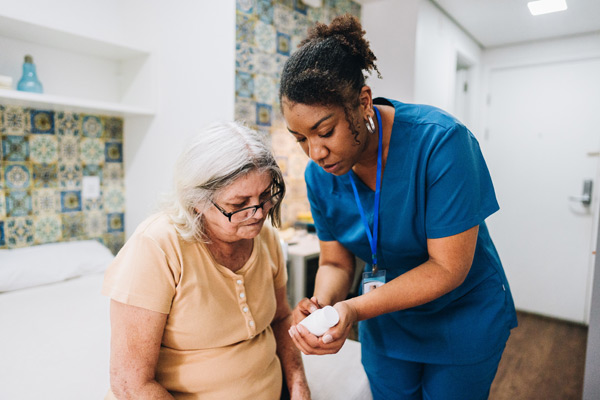
Your loved one may require assistance in order to stay healthy and independent. Continually adapting to day-to-day processes is demanding and a Certified Nursing Assistants (CNA) or Home Health Aides (HHA) can help make the gradual transition as easy as possible by carefully monitoring your loved one.
The main focus of a caregiver is to provide assistance for your loved one as they adapt to limited mobility.
Parkinson’s Care can focuses on:
Supervision:
-
Caretakers can supervise and assist your loved one as they walk, helping to avert accidents.
-
Caretakers can perform light housekeeping tasks and make sure obstacles are out of the way.
Meal preparation:
-
Eating and preparing meals can be difficult when dealing with Parkinson’s disease. CNA’s and HHA’s can help in meal preparation and assist with feeding during tremor episodes. Caretakers also make sure your loved one stays hydrated by offering fluids for thirst relief caused by any medications.
Exercise:
-
Caretakers can help your loved one complete mobility exercises that their doctor may require.
Have questions?
We are here to Help! Call 800-316-2669
for a No-Cost home care consultation or complete our home care request form to be contacted by a home care specialist.
Parkinson’s Home Care Frequently Asked Questions
Have questions? We are here to help! Call 800-316-2669 for a no-cost Parkinson’s home care consultation.
-
How do I know if my parent with Parkinson’s disease needs a caregiver?
A parent with Parkinson’s disease may benefit from a caregiver when symptoms begin making everyday activities difficult or unsafe. Signs can include frequent falls, difficulty walking or getting out of a chair or bed, freezing episodes, trouble bathing or dressing, difficulty preparing meals, medication reminders, or being unsafe when left alone. A caregiver can offer supervision, personal care, mobility assistance, companionship, meal preparation, and help with daily activities while allowing your loved one to remain at home.
-
Can a caregiver help prevent falls in someone with Parkinson’s disease?
Yes. A caregiver can help reduce fall risks by providing supervision and assistance while walking, helping with transfers, keeping walkways free of obstacles, and assisting with activities such as bathing and getting in and out of bed. Caregivers can also encourage the safe use of prescribed mobility equipment, such as a walker or wheelchair. Because Parkinson’s-related balance and mobility problems can change over time, caregivers should follow the safety recommendations of the person’s healthcare professionals.
-
What can a caregiver do when someone with Parkinson’s disease freezes while walking?
A caregiver can remain calm and give the person time to regain movement rather than pulling or rushing them. Simple cues, such as asking the person to take a step, march in place, or focus on a specific target, may help them initiate movement. Caregivers can also provide close supervision during walking and help reduce obstacles or situations that may increase the risk of freezing and falling. Frequent or worsening freezing should be discussed with the person’s healthcare professional.
-
Can Parkinson’s home care help with swallowing difficulties?
Parkinson’s home care can offer assistance and supervision during meals for someone experiencing swallowing difficulties. A caregiver can help prepare appropriate meals, encourage safe eating habits, and watch for difficulties while eating or drinking. However, swallowing problems can require medical evaluation. Caregivers do not diagnose or treat swallowing disorders, and families should follow recommendations from the person’s physician, speech-language pathologist, or other healthcare professional.
-
Can a caregiver help someone with Parkinson’s disease who has tremors?
Yes. A caregiver can assist with daily activities that may become more difficult because of Parkinson’s tremors, including eating, dressing, grooming, bathing, and other personal-care tasks. Caregivers can also help prepare meals, keep frequently used items within easy reach, and provide assistance with activities where tremors may create a safety concern. The caregiver’s role is to provide practical assistance and supervision, not to treat the tremors themselves.
-
Can a caregiver help someone with Parkinson’s disease who has difficulty communicating?
Yes. Parkinson’s disease can affect speech and make communication more difficult for some people. A caregiver can be patient, allow extra time for the person to respond, listen carefully, reduce distractions, and use other communication methods when needed. Caregivers can also offer companionship and help communicate important information to family members or healthcare professionals when appropriate. If speech or communication problems are progressing, a healthcare professional or speech-language pathologist can provide additional guidance.
-
Is 24-hour home care available for someone with Parkinson’s disease?
Yes. 24-hour home care is available for individuals with Parkinson’s disease who need continuous supervision and assistance throughout the day and night. A caregiver can help with personal care, mobility, transfers, meals, medication reminders, companionship, bathroom assistance, and other daily activities. Around-the-clock care can also offer families peace of mind when Parkinson’s symptoms make it unsafe or difficult for a loved one to remain alone.
Granny NANNIES offers Parkinson’s home care and 24-hour in-home care designed to help individuals remain safely and comfortably in their own homes.
-
Can a caregiver help someone with Parkinson’s disease use the bathroom safely?
Yes. A caregiver can assist someone with Parkinson’s disease with safely getting to and from the bathroom, sitting down and standing up from the toilet, and other personal-care needs. Caregivers can also provide assistance with bathing, dressing, and other activities that may become difficult because of Parkinson’s-related mobility or balance problems. Having a caregiver available can help reduce the risk of falls and provide reassurance for someone who may be unsafe using the bathroom alone.
-
Can Parkinson’s caregivers help with walkers, wheelchairs, and other mobility devices?
Yes. Parkinson’s caregivers can assist with the safe use of mobility devices, including walkers and wheelchairs, as part of a person’s daily routine. Caregivers can help make sure the mobility device is available when needed, assist with walking or transfers, and provide supervision when moving around the home.